Cloudy Bites
Not just food content.
A sensory challenge.
CATEGORY · FOOD & BEVERAGE
YEAR · 2025
SCOPE · SENSORY STORYTELLING,
REELS, VISUAL DIRECTION
 FIG. 01 · SENSORY CONTENT SYSTEM
CLIENT / BRIEF
Cloudy Bites is a food brand specializing in Japanese-style bread loaves and indulgent comfort sandwiches.
STRATEGIC PROBLEM
The brand had a visual presence, but the content showed the product more than it communicated the sensory experience, emotional appeal, and craving behind it.
- No strong differentiation in a saturated food market.
- Content focused on product display rather than influencing behavior.
- The brand lacked structured storytelling around the product experience.
- The content did not clearly communicate texture, softness, layering, or satisfaction.
- There was no content system guiding consistency, engagement, or retention.
Not just food content. A sensory challenge.
Voltique approached Cloudy Bites as a behavioral, sensory, and storytelling challenge. The goal was to shift the brand from simply showing food to communicating what the product feels like, how it is made, and why people should crave the experience.
The Work
How the strategy became visible through content, visuals, storytelling, and platform rhythm.
Voltique developed a content system focused on making the product feel real and desirable.
The execution included high-quality reels, professional food photos, and daily Instagram stories that captured preparation, freshness, product detail, customer interaction, and the rhythm of the brand.
Instead of simply displaying the product, the content focused on how it looks, feels, and is experienced.
 FIG. 01 · PRODUCT TEXTURE
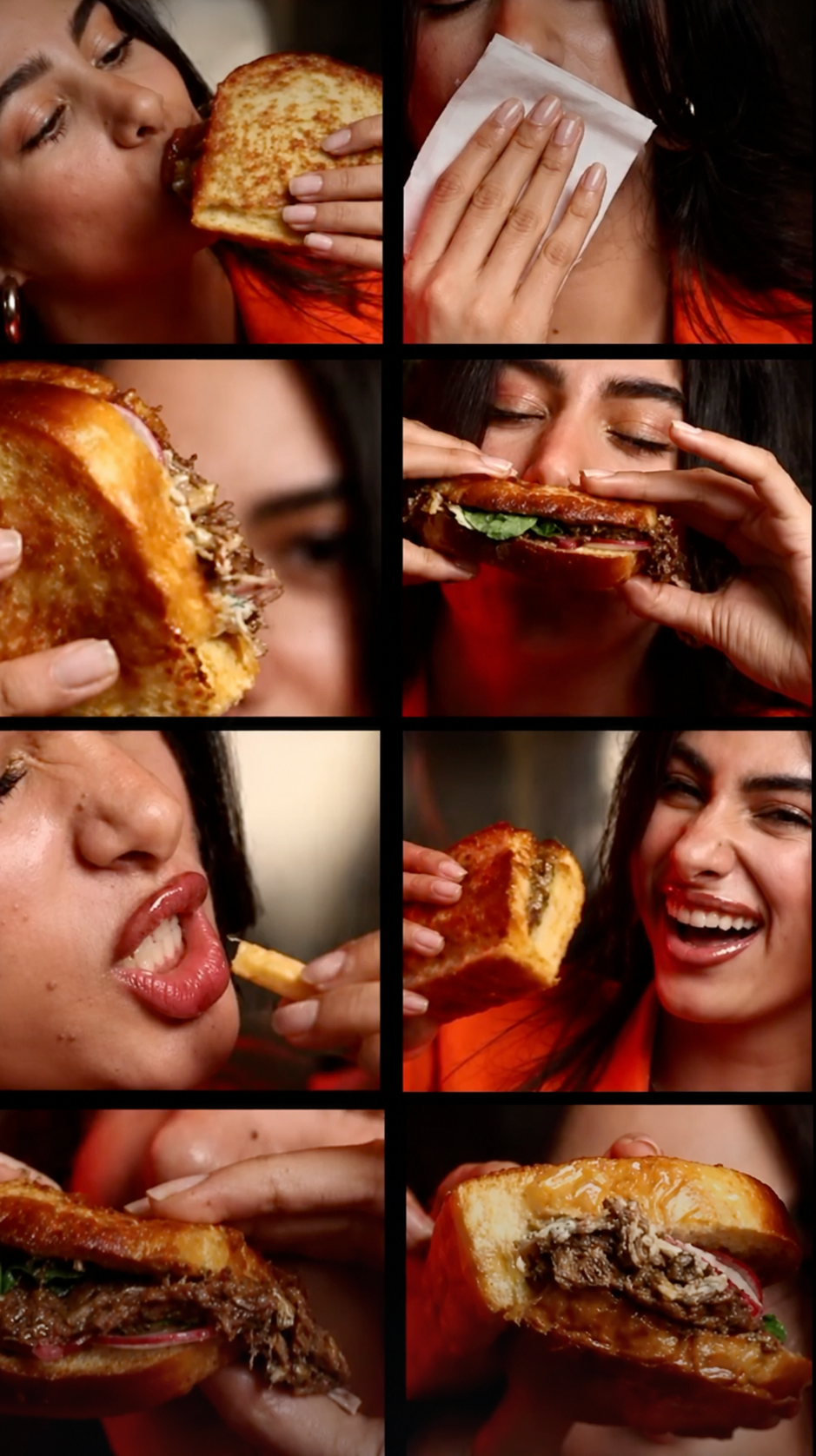 FIG. 02 · PREPARATION MOMENT
 FIG. 03 · CONSUMPTION DETAIL
Outcome
The shift from product display to sensory storytelling changed how the brand was perceived, remembered, and desired.
01
Increased product desirability.
The content made the product feel more premium, satisfying, and craveable before people even tried it.
02
Stronger sensory connection.
Texture, softness, preparation, and consumption moments helped the audience imagine the experience more clearly.
03
Higher interest in trying the product.
The shift from simple display to sensory storytelling made the product feel more emotionally and behaviorally compelling.
04
More memorable product perception.
The brand became associated with comfort, indulgence, and sensory satisfaction.